
Lessons from Past Automation Eras
Recognizing that we are still early in the AI revolution and why you should jump in anyway

Last week we took my father-in-law to the Library of Congress and seeing the inventions that changed how people communicate gave me the chills.
I really believe we’re living through a similarly transformational time.
A couple lessons from the exhibits:
1. Innovations start slow and take upfront effort, then explode:
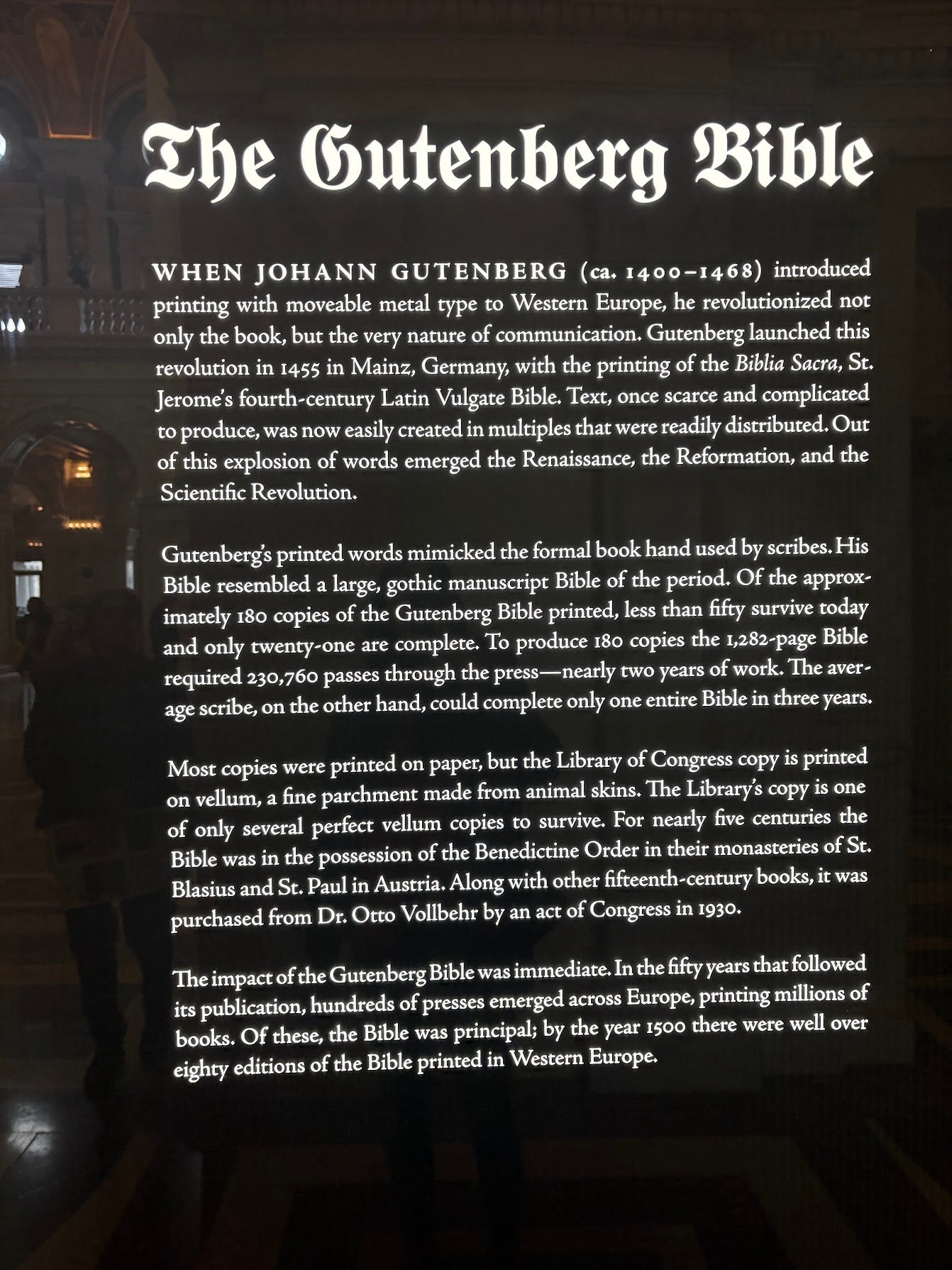
It took two years to print 180 copies of the Gutenberg Bible, requiring the press to run 230,760 times.
While that seems like a huge amount of effort, it was much faster than the the 3 years it took a single scribe to create one copy. Within 50 years, printing operations were producing millions of books. Still most of what they were printing was Bibles so it wasn’t obvious that it would have a much broader impact until later.
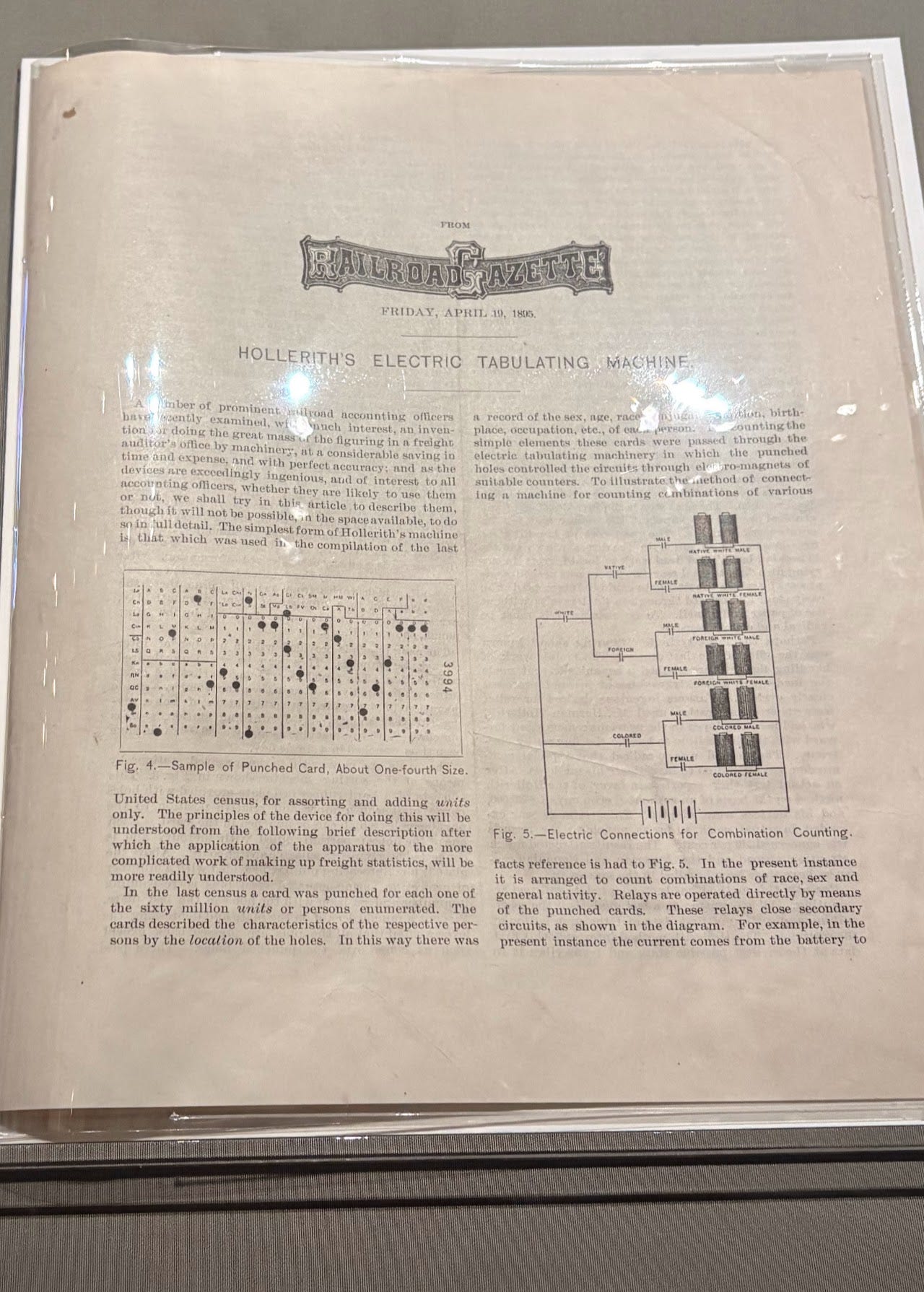
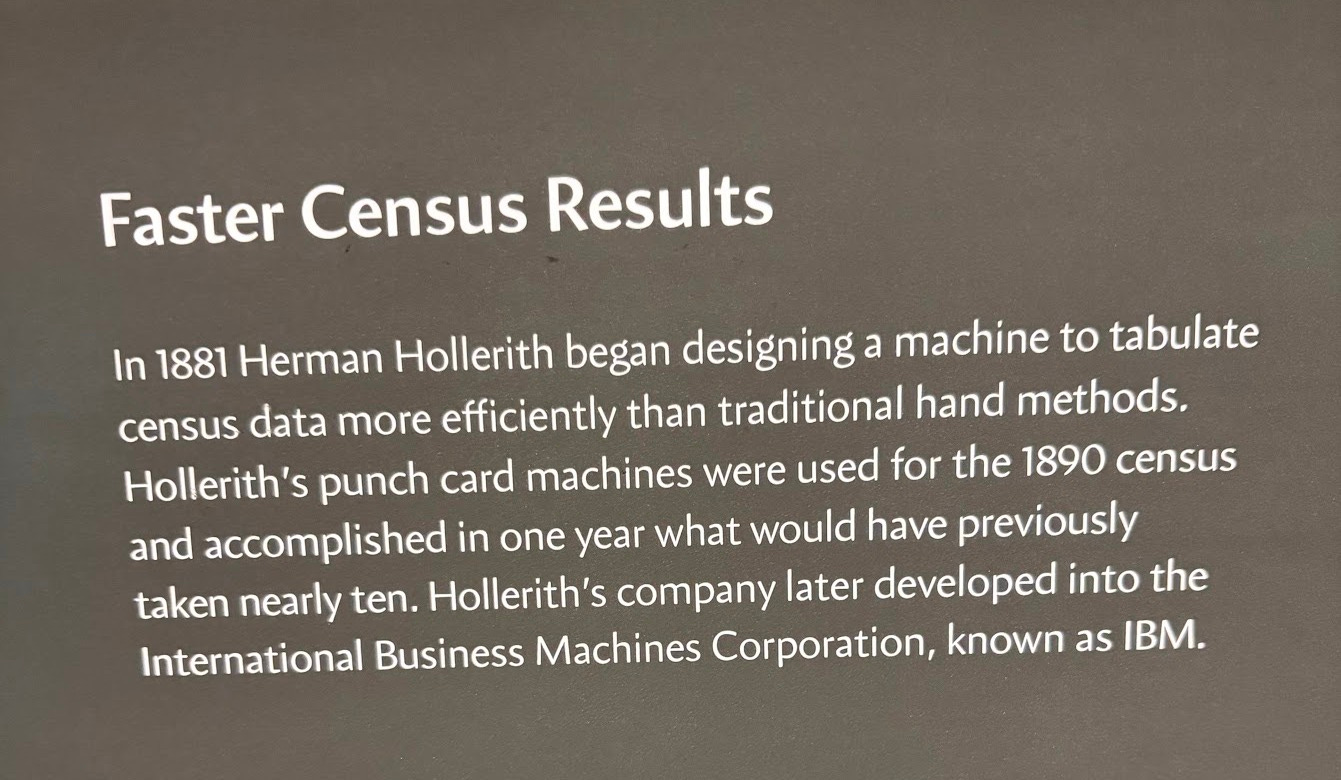
2. The leading companies of the future are likely just emerging: In 1881, a machine was invented to tabulate the census. It reduced the processing time from nearly ten years to just one. The company behind that machine eventually became IBM.
It can feel like sometimes we’re putting in a lot of work to get the magic that AI promises or that it only works for narrow domains like tech, but we’re in the very early days of this innovation cycle.
Here’s my advice:
Recognize that we are still in the early stages of this tech and the advantage of learning the tech early is large.
Some of the up-front work may feel inefficient, and can feel hard to justify, knowing it will be easier in 6 months. Do it anyway for the sake of learning how to. It is not too late to jump in.
We don’t know which of this tech is going to win out to be a long-term company or product. I’m confident the skills of learning how to work with AI will be durable and compounding over time.